The plain-English read
Recon
The cognitive load reducer
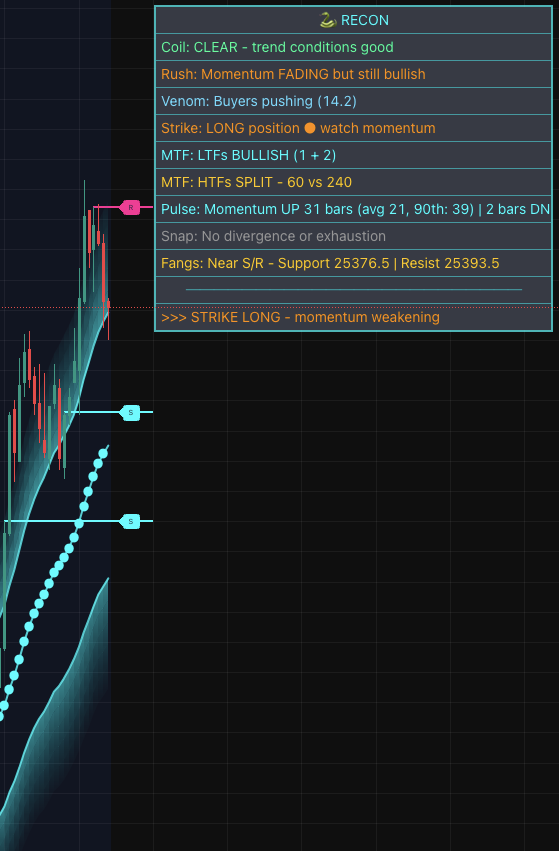
A new category of trading tool. Recon doesn't add more signals to interpret. It reads the indicators you already have and tells you, in plain English, what they say.
The problem
Too many indicators
Most traders don't lack data. They lack mental bandwidth to interpret it all in real time.
You're watching momentum, checking the trend, eyeing support and resistance, monitoring volume and scanning for divergence, all while the market moves. Every indicator you add is one more thing to juggle.
Most tools add complexity. Recon removes it.
The idea
Load vs pressure
Two different forces work against you at the chart.
How the two combine
| Load | Pressure | Result |
|---|---|---|
| High | High | Panic, overtrading |
| Low | High | Blind obedience |
| High | Low | Analysis paralysis |
| Low | Low | Calm situational awareness |
Recon aims for the last row: low load, low pressure, and calm situational awareness.
The solution
What Recon does
Indicator roles
Seven inputs, one read
Each indicator answers one question. Recon puts the answers together.
Coil
"Is this market tradable?" Chop versus trending conditions.
Rush
"What's the engine doing?" Momentum direction and strength.
Pulse
"Where are we in the trend?" Trend age and statistical exhaustion.
Fangs
"Where are the walls?" Support and resistance levels.
Venom
"Who's in control?" Volume pressure, buyers versus sellers.
Strike
"Where's the trend?" Cloud direction and entry signals.
Snap
"Am I too late?" Divergence and reversal warnings.
Why it matters
The difference
Most traders do Recon's job in their head. They look at momentum, check the trend, glance at support levels and weigh volume, all while trying to make a decision.
Recon externalizes that mental work. It's like having an experienced trader lean over and say:
"Here's what the market is doing. You decide what to do with it."
That's why it feels calming instead of exciting. It supports patience, selectivity, and self-trust.
To be clear
What Recon is not
Get started
Reduce the noise
Recon is included in every plan. See what a chart feels like when you're not juggling seven indicators in your head.